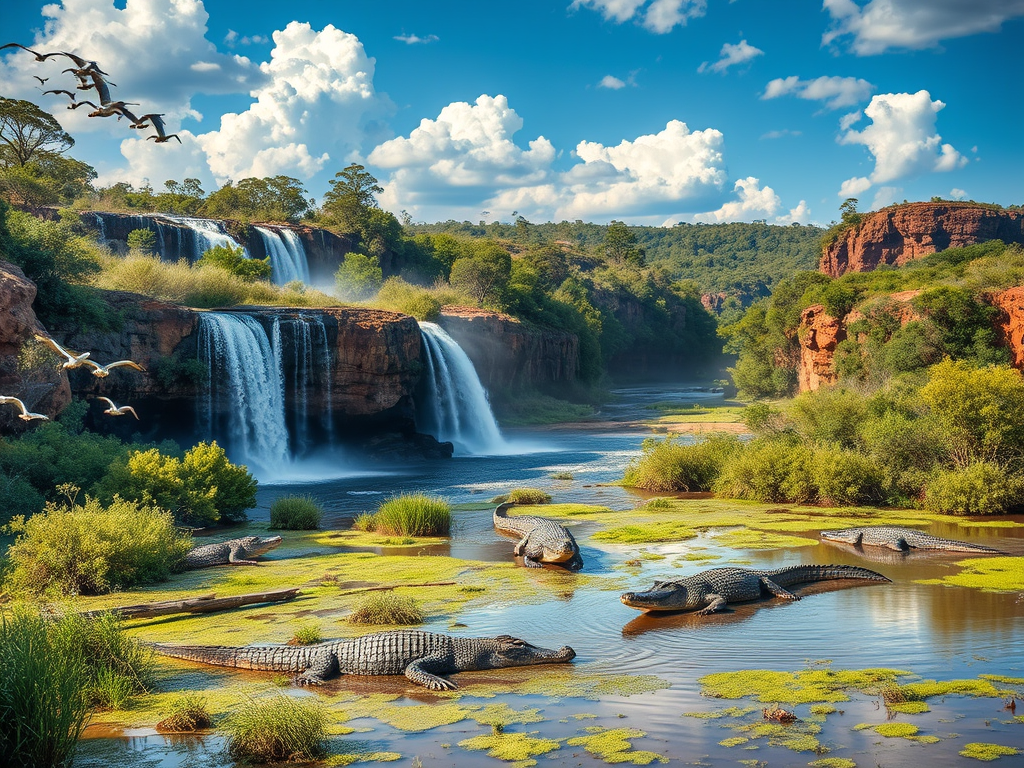
Kakadu National Park, a UNESCO World Heritage-listed site, is one of Australia’s most iconic natural and cultural landscapes. Traditionally, tourism in Kakadu has been concentrated in the dry season (May to October) due to accessibility challenges during the wet season (November to April). However, the wet season transforms Kakadu into a dynamic, thriving ecosystem—with cascading waterfalls, flooded wetlands, and an explosion of wildlife.
This paper argues that investing in wet-season tourism infrastructure—such as sealed roads, elevated bridges, and flood-resistant facilities—could unlock significant economic benefits for the Northern Territory and Australia. By extending the tourism season, Kakadu could attract new visitor demographics, create year-round jobs, and reduce the economic volatility of seasonal tourism.
The Wet Season: Kakadu’s Untapped Tourism Asset
1. Ecological and Aesthetic Appeal
During the wet season, Kakadu undergoes a dramatic transformation:
- Waterfalls & Floodplains: Iconic sites like Jim Jim Falls and Twin Falls flow at full capacity, offering breathtaking scenery.
- Wildlife Spectacles: Millions of migratory birds arrive, crocodiles become more active, and the wetlands teem with life.
- Unique Experiences: Fewer tourists mean more exclusive, intimate encounters with nature.
Despite these attractions, visitation drops sharply due to:
- Road closures (unsealed roads become impassable).
- Limited infrastructure (few flood-resistant facilities).
- Perceived inaccessibility (tourists assume the park is “closed”).
2. Current Economic Limitations of Seasonal Tourism
Kakadu’s tourism economy is highly seasonal, leading to:
- Boom-bust employment cycles – Many businesses and tour operators struggle outside the dry season.
- Underutilized assets – Accommodation, transport, and hospitality sectors face low occupancy for half the year.
- Lost revenue – International and domestic tourists who visit Australia in the wet season (e.g., European winter travelers) bypass Kakadu due to accessibility concerns.
Economic Case for Wet Season Tourism Development
1. Extending the Tourism Season = More Revenue
If Kakadu were accessible year-round, it could:
- Increase visitor numbers by attracting off-peak travelers (backpackers, photographers, eco-tourists).
- Boost length of stay – Wet season experiences (birdwatching, Indigenous cultural tours) could encourage longer visits.
- Diversify tourism markets – Target niche markets like adventure tourists, researchers, and luxury eco-travelers.
Estimated Economic Impact:
- Current annual visitors: ~250,000 (mostly in dry season).
- If wet season tourism captured even 20-30% of dry season numbers (~50,000-75,000 additional visitors), this could inject $30–50 million annually into the local economy (based on average tourist spend).
2. Job Creation & Regional Economic Stability
Year-round tourism would:
- Support permanent jobs in hospitality, guiding, transport, and retail (reducing reliance on seasonal labor).
- Stimulate Indigenous employment – More Aboriginal-owned tours and cultural experiences could operate continuously.
- Encourage infrastructure investment – Construction jobs from road upgrades, lodges, and visitor centers.
3. Reducing Overcrowding & Environmental Pressure
- Dry season tourism concentrates visitors in a short window, straining park resources.
- Spreading visitation across the year could reduce environmental degradation at popular sites.
Key Infrastructure Investments Needed
To make wet season tourism viable, strategic infrastructure upgrades are essential:
1. Transport & Accessibility
- Sealing Key Roads – Critical routes like the Arnhem Highway and park access roads need all-weather sealing.
- Elevated Bridges & Floodproof Crossings – Ensure access to major attractions even during heavy rains.
- Improved Signage & Digital Updates – Real-time road condition apps for tourists.
2. Tourism Facilities
- Flood-Resistant Accommodation – Eco-lodges, floating cabins, or stilted resorts.
- Enhanced Visitor Centers – Interactive wet-season exhibits, Indigenous storytelling spaces.
- Adventure Tourism Infrastructure – Boardwalks, boat tours, and guided wetland safaris.
3. Marketing & Perception Shift
- Rebrand Kakadu’s Wet Season – Promote it as a “secret season” with unique wildlife and landscapes.
- Target Niche Markets – Birdwatchers, photographers, cultural tourists.
- Collaborate with Airlines & Tour Operators – Package deals for wet season travel.
Funding & Investment Models
1. Public-Private Partnerships (PPPs)
- Government funding for critical road and bridge upgrades.
- Private sector investment in eco-accommodation and tours.
2. Indigenous-Led Tourism Enterprises
- Leverage Kakadu’s Traditional Owners in joint ventures (e.g., Aboriginal-guided wet season tours).
3. Grants & Tourism Levies
- Utilize existing tourism development funds (e.g., NT Government, federal grants).
Conclusion: A Sustainable Path Forward
Kakadu’s wet season is not a barrier—it’s an untapped opportunity. By investing in the right infrastructure, the Northern Territory can:
✅ Extend tourism earnings beyond the dry season.
✅ Create stable, year-round jobs for local communities.
✅ Position Kakadu as a global, all-season destination.
The economic case is clear: with strategic upgrades, Kakadu could unlock millions in additional revenue while preserving its natural and cultural heritage. The time to act is now—before climate change and competing destinations reshape traveler preferences.
What’s Next?
- Advocate for government and private sector investment.
- Pilot wet-season tourism programs.
- Engage Traditional Owners in sustainable development.
Let’s make Kakadu’s wet season the next big thing in Australian tourism.
#Kakadu #TourismDevelopment #SustainableTourism #EconomicGrowth #NorthernTerritory
 NT TOP ADVENTURES International Tour Specialist for the Territory
Leave a comment